






Web Converting Slitter Rewinder : Why Material Properties Matter When Configuring a Right Machine
Customer Care 2026-07-14
Every web material imposes its own constraints on the slitter rewinder. Copper foil fractures under uneven tension; aramid paper delaminates if blade geometry is wrong; nonwovens require air-permeable winding to prevent roll telescoping; BOPP film builds static that contaminates slit edges. A machine configured for one substrate will produce defects — or scrap — on another.
Nicely slitter rewinders are engineered around this material-first logic. Each model specifies tension range, slitting station geometry, and winding configuration based on the substrate family it handles — not as a universal compromise, but as a targeted solution.
What Is Web Converting and Why Does Equipment Configuration Matter?
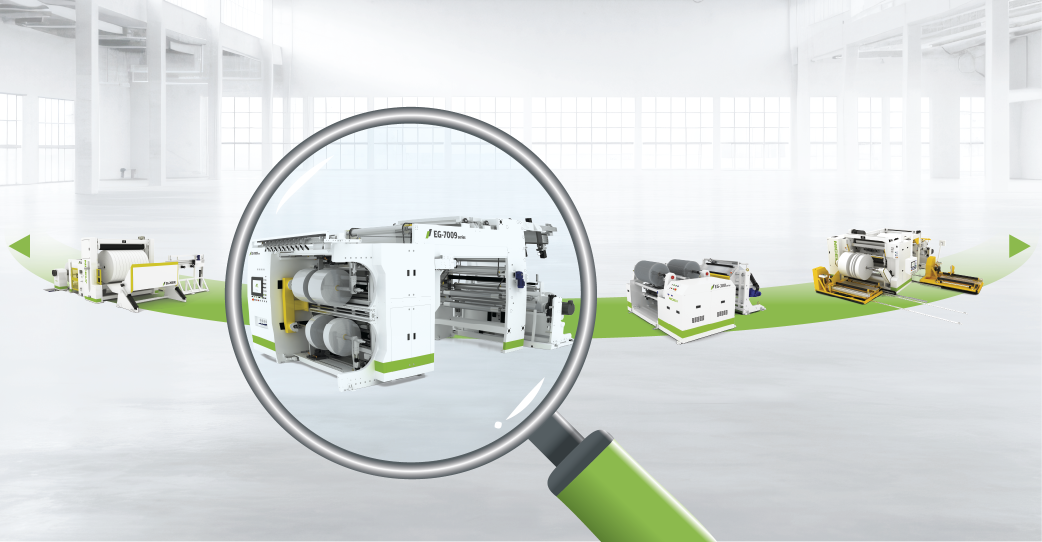
Web converting is the industrial process of transforming wide master rolls into narrower, finished-width rolls through slitting, rewinding, and related converting operations. The slitter rewinder is the core machine: it splits the master web, controls tension, and rewinds to spec.
Nicely designs slitter rewinders for five web material families, each with distinct requirements for tension behavior, slit quality, and winding stability.
What Exactly is a Slitter Rewinder?
A slitter rewinder integrates three core functional stages in a continuous web converting line:
- Unwinding: Feeds master rolls while maintaining controlled web tension.
- Slitting: Cuts the web lengthwise using shear, score, or razor systems. Because the choice of slitting geometry directly dictates edge finish and dust control for sensitive materials, selecting the correct blade configuration is paramount. For a deeper engineering breakdown of blade selection, read our comprehensive guide on Razor, Shear & Score Slitting Methods for Converting Professionals
- Rewinding: Rewinds slit strips into finished rolls with correct tension and geometry.
Machine configuration is driven by the web material — paper, films, nonwovens, foils, and composites each require different engineering approaches. See our 5 Basic Guide to Slitter Rewinders. For an overview of automation levels and how to match them to your production volume, see Manual vs. Automated Slitter Rewinder Configurations.
Comprehensive Applications of Web Converting Slitter Rewinders
-
Metal Foils — Slitter Rewinders for Copper and Aluminum Web Converting
Metal foil web converting demands the highest standards of surface integrity, dimensional accuracy, and tension stability. Copper foil webs for lithium-ion battery anodes and PCB laminates are ultrathin and intolerant of tension spikes that cause stretch or wrinkling. Aluminum foil for capacitor films and flexible packaging requires the same precision, combined with dust-free cutting to prevent contamination.
Key challenges: surface scratching during web transport, electrostatic contamination, and slit edge quality over long runs. Nicely machines are configured with anti-scratch guide systems and precision blade positioning.Applications:
- Copper foil webs for lithium-ion battery anodes and PCB laminates
- Aluminum foil webs for capacitor films and flexible packaging
- Flexible electronics substrates
Compatible Models:
- EG-5000 Series Copper Foil Slitter Rewinder
- EG-7003B Integrated Slitter Rewinder
Technical Specifications for Metal Foil Web Converting
Machine Model Target Web Materials Core Engineering Highlights Winding Mode 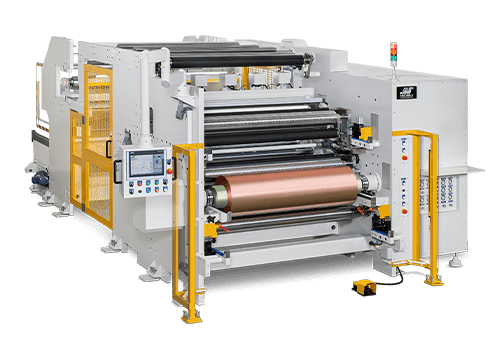
EG-5000 series
Copper Foil Slitter Rewinder
Ultra-thin copper foil, aluminum foil webs Anti-scratch guide systems, tension spike elimination, electrostatic contamination control Duplex Shaft _C3_.png?yioltsmo1q)
EG-7003B
Integrated Slitter Rewinder
Battery anode foils, PCB laminates, capacitor films Integrated compact design, precision blade positioning, dust-free cutting Center Winding Read more: Foil Slitting Machine for Li-Ion Battery and Electro Materials : A Solution to Reduce Waste and Improve Efficiency
View compatible models: Metal Foil Slitter Rewinders -
Electrical Insulations — Precision Insulation Web Handling for High-Voltage Applications
Electrical insulation web converting handles materials — mica tape, aramid paper (Nomex), PET/PI composite films, and pressed board — combine high mechanical stiffness with near-zero tolerance for edge damage. A delaminated mica tape edge or torn aramid fiber at the cut face can directly compromise dielectric performance.
Machine requirements: slit widths down to 4 mm for motor coil winding, differential shaft rewind to balance tension across materials of varying stiffness, and half-cut capability for composite films where full-depth slitting damages the substrate backing.Applications:
- Mica tape for transformer and motor winding (mica tape web slitting)
- Aramid paper / Nomex for dry-type transformer insulation
- PET/PI composite films for EV traction motor insulation
- Pressed paper and board for HV switchgear
Technical Specifications for Insulation Web Handling
Machine Model Target Web Materials Core Engineering Highlights Min. Slit Width .png?jou3au3k1x)
EG-300 series
Multi-Purpose Slitter Rewinder
Aramid paper (Nomex), PET/PI composite films, pressed board Half-cut capability for composite substrates, zero edge damage control Down to 10 mm 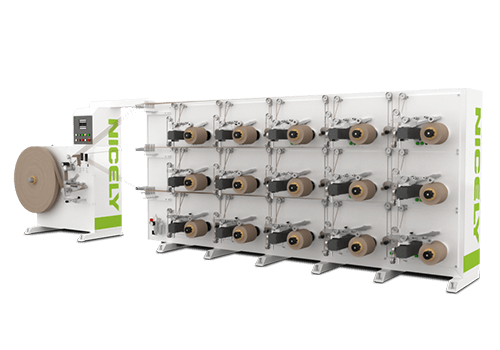
EG-9000 series
Spooling Slitter Rewinder
Mica tape, high-stiffness narrow insulation ribbons Differential shaft rewind for tension balancing, ultra-narrow multi-spooling Down to 4 mm Read more: Slitting Electrical Insulation Materials: A Technical Guide
View compatible models: Electrical Insulation Slitter Rewinders → -
Flexible Packaging web converting — High-Speed Film Web Converting for Consumer and Industrial Applications
Flexible packaging web converting runs BOPP, BoPET, PE, and PP film webs at 300–600 m/min, where any tension variation causes width inconsistency, roll telescoping, or splice failure. Multilayer laminate webs for food packaging, pharma blister, and e-commerce labels require consistent slit quality across the full web width, run after run.
Sustainability-driven shifts to thinner gauges (12 µm replacing 20 µm) increase the demand for precise tension management. Nicely film converting machines use duplex rewind architecture and automatic tension taper control.Applications:
- BOPP, BoPET, PE, PP film webs for flexible packaging
- Multilayer laminate webs for food and pharmaceutical packaging
- Label webs — pressure-sensitive and linerless
Compatible Models:
- EG-8003 Series Primary Slitter Rewinder
- EG-7008 Series Duplex Shaft Center Winding Slitter Rewinder
Technical Specifications for High-Speed Film Web Converting
Machine Model Target Web Materials Core Engineering Highlights Max. Line Speed .png?3ajrkfnigz)
EG-8003 series
Primary Slitter Rewinde
BOPP, BOPET, PE, PP film webs, primary film roll processing Primary mill roll breakdown, massive throughput stability, uniform slit geometry Up to 600 m/min _500X281.png?ta1f35k2gm)
EG-7008 series
Duplex Shaft Center Winding Slitter Rewinder
Multilayer laminates, food & pharma packaging webs, labels Duplex shaft center winding, automatic tension taper control, zero roll telescoping Up to 400 m/min Read more: Flexible Packaging Film Slitting: Understanding the Process
View compatible models: Labels, Films & Pharma-Related category -
Nonwovens — Web Converting for Hygiene, Medical, and Industrial Applications
Nonwoven web converting handles materials that are low in stiffness, high in extensibility, and sensitive to both over-tension and under-tension. . Hot-air through nonwovens for hygiene products require minimal-contact web handling and stable draw control throughout the converting process.
High-speed slitting for diaper backsheet, spunlace wipes, and meltblown filtration media requires machines for large parent rolls (800–1,200 mm OD), wide webs (up to 3,200+ mm), and fast automatic roll discharge. Medical applications add requirements for fiber contamination control and ultra-low basis weight capability.Applications:
- Spunbond webs for diaper components and agricultural covers
- Spunlace webs for surgical gowns, facial masks, and personal care
- Meltblown webs for medical filtration and respirator media
- Hot-air through nonwoven webs for hygiene and infant care
Technical Specifications for Nonwoven Web Converting
Machine Model / System Target Web Materials Core Engineering Highlights Max. Parent Roll OD .png?lify7ycgvn)
EG-SR series
Nonwoven Master Winder
Spunbond, spunlace, meltblown heavy parent rolls Master winder architecture, handles wide webs up to 3,200+ mm, stable draw control Up to 1,200 mm .png?a97ihypypz)
EG-2001G series
Nonwoven Slitter Rewinder
Hot-air through nonwovens, low basis weight hygiene webs Ultra-sensitive tension management, minimal-contact web handling, fiber contamination control Up to 1,000 mm .png?gcv8snmyz1)
EG-PACK
Roll Handling System
Finished nonwoven slit rolls Fully automated roll discharge, integrated wrapping, continuous material flow Integrated Workflow Read more: Nonwoven Slitting: Solving Hot Air Tension Challenges
View compatible models: Nonwoven Slitter Rewinders -
Paper & Board — High-Tension Paper Web Slitting for Packaging and Industrial Converting
Paper and board web converting spans a weight range from lightweight paper (15 g/m²) to heavy kraft board (400 g/m²). Each requires a different winding approach: surface winding for tissue to avoid core crushing, center winding for coated label stocks, turret winding for high-volume lines where changeover time drives output.
Tension variation during rewinding directly affects roll hardness and diameter consistency, causing print registration errors downstream. Sustainability trends are bringing barrier-coated papers, water-activated tape, and molded pulp laminates into converting lines alongside traditional substrates.Applications:
- Coated paper and board webs for food and pharma packaging
- Kraft paper webs for industrial wrapping and stationery
- Linerless label webs for e-commerce and logistics
- Barrier-coated paper webs replacing plastic flexible packaging
Technical Specifications for Heavy-Tension Paper Web Slitting
Machine Model Target Web Materials Winding & Handling Advantage Material Weight Range 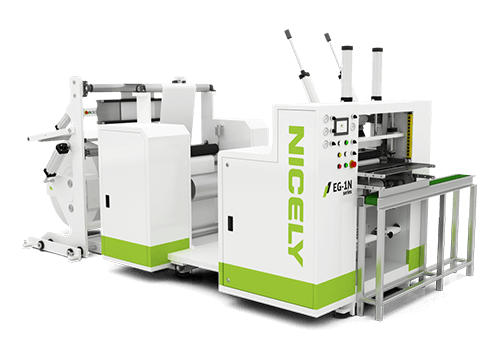
EG-1N series
Semi-Automatic Surface Winding Slitter Rewinder
Coated paper, kraft paper webs, barrier papers Surface winding to prevent core crushing, precise roll hardness control 15 to 400 g/m² .png?svo16aaxe8)
EG-2 series
Duplex Shaft Surface Winding Slitter Rewinder
.png?j58nvlgjof)
EG-7001 series
Turret Winding Slitter Rewinder
Linerless labels, e-commerce logistics stock, high-volume papers Turret winding system, ultra-fast roll changeover, non-stop continuous production 40 to 300 g/m² Read more: Supporting Your Sustainability Goals with Reliable Paper Slitter Rewinders
View compatible models: Paper Slitter Rewinders -
Upgrade & Retrofit — Extending the Life of Existing Web Converting Equipment
Not every web converting improvement requires a new machine. Retrofit programs offer a cost-effective path to improved performance, new material capability, or safety compliance — while preserving existing mechanical structure and operational knowledge.
Common scopes: control system modernization (PLC, HMI upgrade), tension control improvement, mechanical adaptation for new formats, and safety system renewal. Nicely evaluates both Nicely and non-Nicely machines for retrofit feasibility, starting from a root-cause engineering assessment rather than a standardized upgrade package.Common upgrade scope:
- Control system modernization: PLC, HMI, fieldbus integration
- Tension control improvement for new web materials
- Mechanical retrofit for wider web width or new roll formats
- Safety system renewal: guarding, emergency stop, interlock
Read more: Slitting Machine Investment: Choosing Between New or Retrofit
Web Converting FAQ: Expert Troubleshooting & Technical Insights
Q1: What is the difference between slitting and converting?
A: Converting transforms master rolls into finished formats — including slitting, laminating, coating, printing, and die-cutting. Slitting cuts a wide web into narrower webs lengthwise. A slitter rewinder performs the slitting and rewinding steps within a converting workflow.
Q2: What web materials can a Nicely slitter rewinder process?
A: Five families: metal foils (copper, aluminum), electrical insulation materials (mica tape, aramid paper, Nomex, PET/PI composite films), flexible packaging films and labels (BOPP, BoPET, PE, PP, laminates), nonwovens (spunbond, spunlace, meltblown, hot-air through), and paper and board (coated, kraft, linerless).
Q3: How do I choose a slitter rewinder for my web converting needs?
A: Key parameters: web material and tension range, parent roll OD and width, finished roll OD and slit width range, line speed, and winding mode (center, surface, or duplex). Nicely's engineering team reviews your material and production spec to recommend the right configuration.<
Q4: What is web tension and why does it matter in slitting?
A: Web tension is the force per unit width applied to the material through the slitter rewinder. Too little causes web wander and loose winding; too much causes stretch, delamination, or core crushing. The tension control system must hold the web within its usable window from full roll to near-core throughout the run.
For a full checklist of maintenance routines that keep tension systems in spec, see: 10 Key Maintenance Tasks for Your Slitter Rewinder
Q5: Can existing slitter rewinders be upgraded for new web materials?
A: In most cases, yes. The key question is whether the existing tension range, slitting station, and winding geometry are compatible with the new material. Nicely evaluates both Nicely and non-Nicely machines — contact us with your current machine spec and target material.
For common symptoms and root-cause diagnosis of slitter rewinder problems, see: Troubleshooting for Slitter Rewinder Machine Problems
Talk to Our Web Converting Engineers
With over 40 years of web converting equipment experience, Nicely handles both new machine specifications and retrofit assessments for existing lines. Contact our engineering team to get a tailored technical evaluation. Schedule a Free Technical Consultation with Our Experts.