



Slitting Electrical Insulation Materials : A Technical Guide for Mica Tape, Aramid Paper, Nomex, and Composite Paper and Films
Case Study 2026-04-24
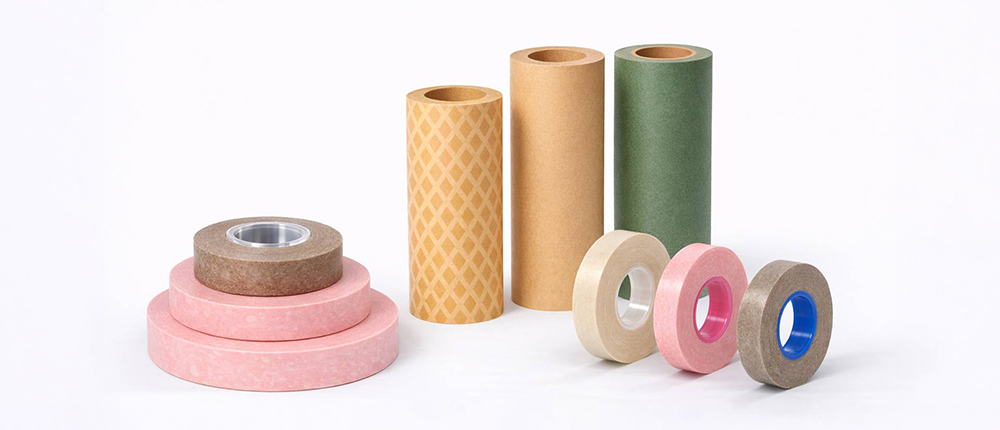
Electrical insulation materials leave little room for error in converting. Incorrect tension causes mica tape to delaminate. Improper blade settings ruin the edges of aramid paper. A poorly designed web path makes PET composite films curl off the reel. None of this reflects machine limitations — it reflects the nature of the materials themselves, and why slitter configuration decisions carry real consequences on every run. If you are still deciding on machine type rather than settings, our slitter rewinder machine guide covers the winding configurations and specification ranges behind those decisions.
Converters working with IEC-rated transformer insulation paper, mica tape, aramid-based laminates, and PET composite films know that material supplier specifications alone do not define a production process. Thickness tolerances, surface coatings, and layered composite structures each place distinct demands on tension control, blade geometry, and web path design.
This guide covers why each material behaves differently during slitting, what machine conditions each one demands, and how output format — pancake roll or spool — maps to downstream equipment requirements. The configurations described here draw on 50+ installations across electrical insulation slitter rewinders in Europe, Asia, and Africa.
Why Electrical Insulation Materials Are Challenging for Narrow Slit and Winding
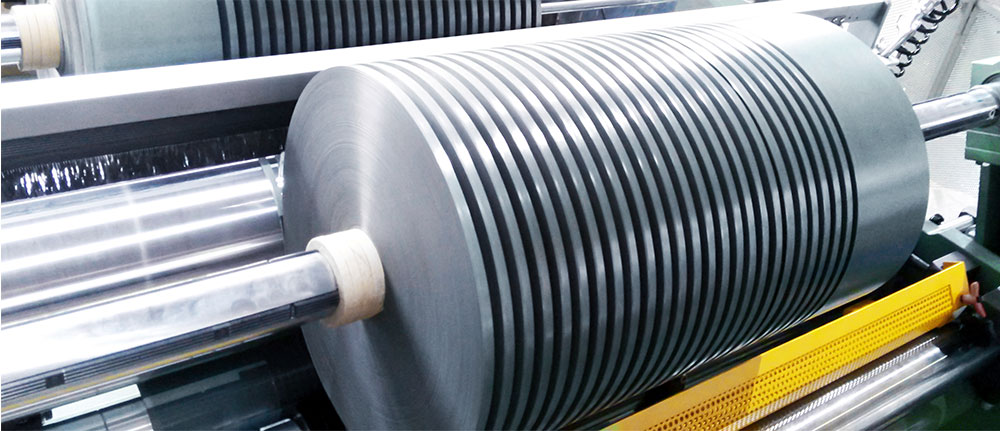
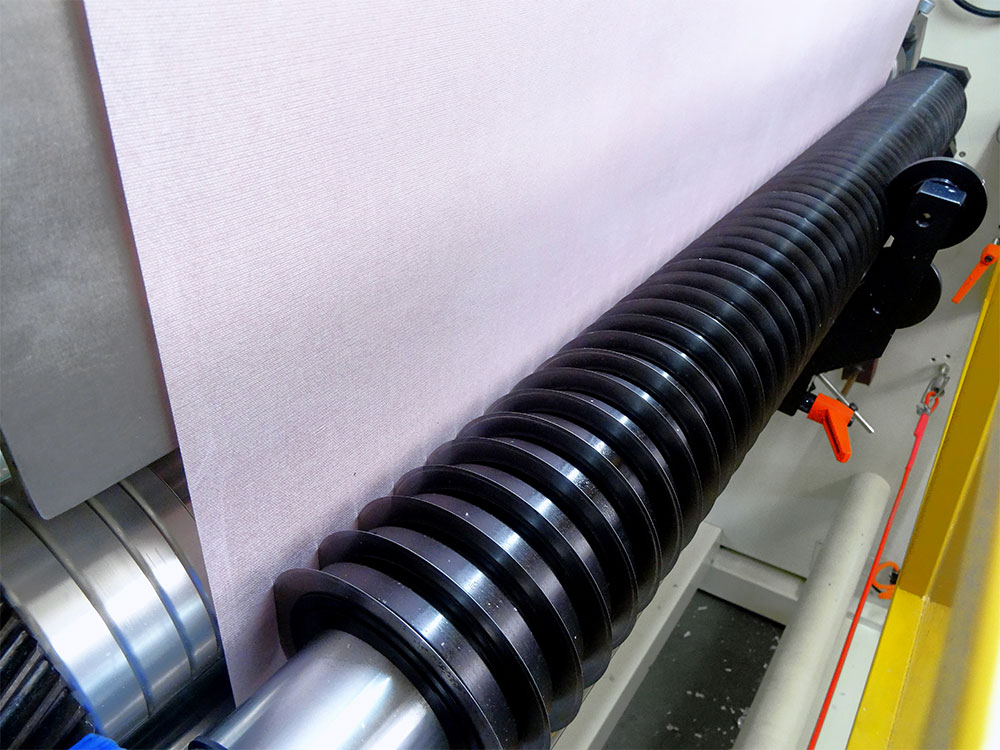
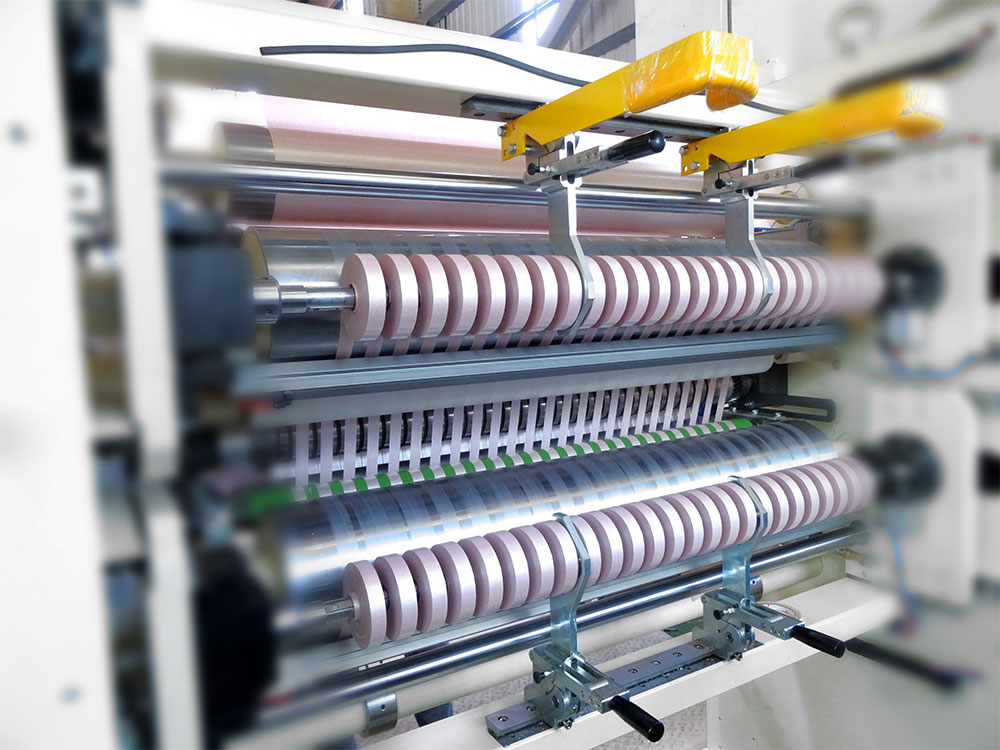
Narrow slitting of electrical insulation materials for presspaper and mica are mainly a torque problem. Converting a 1,200mm mother roll into 10mm finished strips means managing over 100 simultaneous rewind pads. As roll diameter builds, combined torque demand rises sharply and outer lanes could lose tension before the run is complete, producing inconsistent roll density across the web.
Slitting Method Selection by Materials
Each material family requires a different slitting method and a different set of machine conditions. The table below maps each material to its recommended slitting approach, end application, critical requirement, and typical slit width range.
| Material | Slitting Methods | Where it goes | Critical requirement | Slit width range |
|---|---|---|---|---|
| Mica tape (glass-backed / PE-backed) | Wrap shear slitting | Transformer coils, generator windings, fire-resistant cable wrap. | No delamination; spool or pancake to match taping equipment. | 4 mm – 25 mm |
| Aramid paper — Nomex-class | Wrap shear slitting | Motor slot liners, separators, transformer interleaf. | Burr-free edge; consistent width downstream applications. | 6 mm – 40 mm |
| PET / PI composite insulation film | Wrap shear slitting | Slot liner laminates, EV battery cell wraps, flexible inter-layer insulation. | Anti-curl; no inter-layer blocking; static control. | 5 mm – 50 mm |
| Pressboard / presspaper | Wrap shear slitting / Score (crush) slitting | Transformer oil barriers, capacitor interleaf. | Controlled cutting force for stiff, dense board. | 10 mm – 50 mm |
Output Format : Pancake Roll vs. Spool
Output format is not a secondary consideration — it directly determines machine configuration and affects downstream productivity.
Pancake Roll (Disc Winding)
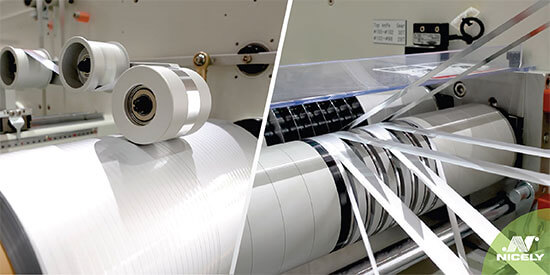
Pancake rolls are used for transformer coil taping, generator winding, and fire-resistant cable production. Roll geometry must match the taping machine's tensioner: core diameter, maximum roll diameter, and traverse width are all specified by the downstream equipment. For mica tape destined for transformer coil winding, roll diameters of 250mm - 450mm on 1” to 3" cores are standard.
Spool Winding
Spool output is used for motor winding operations where material is de-spooled directly into an automated winding line. Spool geometry — traverse pattern, layer count, flange diameter — must match the winding machine's feed requirements precisely. Incorrect traverse winding produces uneven de-spool tension, which causes winding defects downstream.
Two-Ply Spool: Wrapping Copper Rod
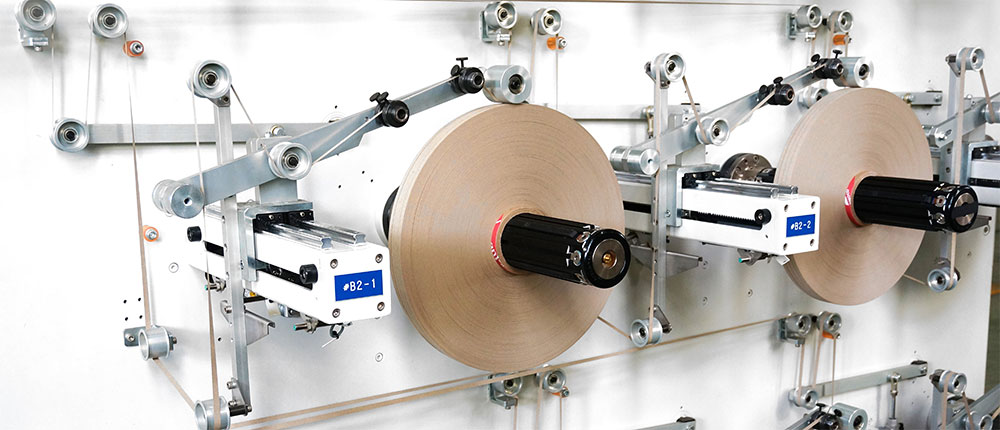
A specific motor winding application requires two layers of aramid paper wound together onto a single spool, then used to wrap copper rod or rectangular conductor in an automated winding line.
The slitter must feed both plies simultaneously as a composite web, managing the inter-ply tension relationship independently. If the two plies carry different tension levels, the composite does not wind uniformly and creates problems when de-spooling at the winding machine.
Nicely EG-9000 series handles spools through a common web path with independent tension zones, and the traverse winding geometry is programmed to match the downstream copper rod winding machine's de-spool requirements.
Machine Models for Electrical Insulation Converting
The following configurations cover the four primary insulation converting applications. Full specifications are on the respective product pages.
| Material / Application | Recommended Model | Key Reason | Min. Slit Width |
|---|---|---|---|
| Mica tape — pancake & spool on one line | EG-9000 series | Switch between pancake and spool output without a second machine | 4 mm |
| Aramid paper — two-ply spool for copper rod wrapping | EG-9000 series | Dual-ply simultaneous feed with independent inter-ply tension | 6 mm |
| Aramid paper, PET/PI composite, pressboard | EG-300 series | Three-zone independent tension; web width to 1,100 mm | 4 mm |
| High-volume insulation film and laminates | EG-8002 | Duplex shaft center winding; web width to 1,700 mm | 50 mm |
| Narrow-width mica tape, PI film, insulation paper | EG-7003D | Cantilevered shaft — clear operator access for narrow-web blade adjustment | 20 mm |
Read More: Deciding whether to invest in a new machine or modernizing your existing equipment through strategic retrofits is a complex decision. Explore our analysis of Slitting and Rewinding Machine Investment: Choosing Between New or Retrofit.
Where These Nicely Machines Are Used
The 50+ installations in this product range span four segments of the electrical insulation supply chain:
- Mica insulation manufacturers in Europe and Asia — supplying transformer coil tape, generator insulation, and VPI tape to power generation and industrial motor producers
- Motor insulation converters in Europe and Japan — producing slot liner systems for industrial motors, EV traction motors, and wind generator stators
- Cable insulation converters in Africa — processing mica tape and laminated insulation materials for fire-resistant and high-voltage cables (including repeat machine purchases from the same facility)
- Flexible insulation film converters in Europe — producing PET and PI composite laminates for transformers and high-voltage rotating machines
Work with Nicely Machinery
With 50+ electrical insulation installations across transformer, motor, cable, and EV battery production — from Europe and Japan to Africa — our engineering team has worked through most of the edge cases you will encounter. Whether you are configuring a new line or replacing equipment that is not meeting edge quality targets, we offer:
- Material evaluation: We review your material construction and slitting specifications before recommending a configuration.
- Trial slitting: Available for new material construction or where existing equipment has not met edge quality requirements.
- Tension profiling: For composite laminates and multi-ply applications where standard tension settings are a starting point, not a solution.
- After-sales support:Blade setting guidance, tension zone calibration, and remote diagnostics for installed machines.
Read More: Proactive maintenance and prompt diagnosis of issues like material wrinkles or web breaks are essential to avoid costly downtime. See our 10 Troubleshooting Tips for Common Slitter Rewinder Machine Problems.
Tell us your material, your slit widths, and your output format. We will come back with a specific machine recommendation. Contact our slitting engineers.