







Label Slitter Rewinders for Release Liner and PSA Labelstock Converting
Customer Care 2026-06-23
Release liners — the silicone-coated paper or film backing that protects pressure-sensitive adhesives — are a high-volume converting substrate that often arrives at the slitter in wide master rolls and leaves as narrow, application-ready reels. The slitter rewinder that processes release liner has a specific set of demands that differ from standard paper or film converting. Those requirements sit on top of the standard machine architecture, which our guide to slitter rewinder types and key components sets out in full.
This article covers what makes release liner and double-sided release paper slitting technically distinct, and which Nicely label slitter rewinder models are configured for these applications.
What Is Release Liner — and Why Does It Matter for Slitting?
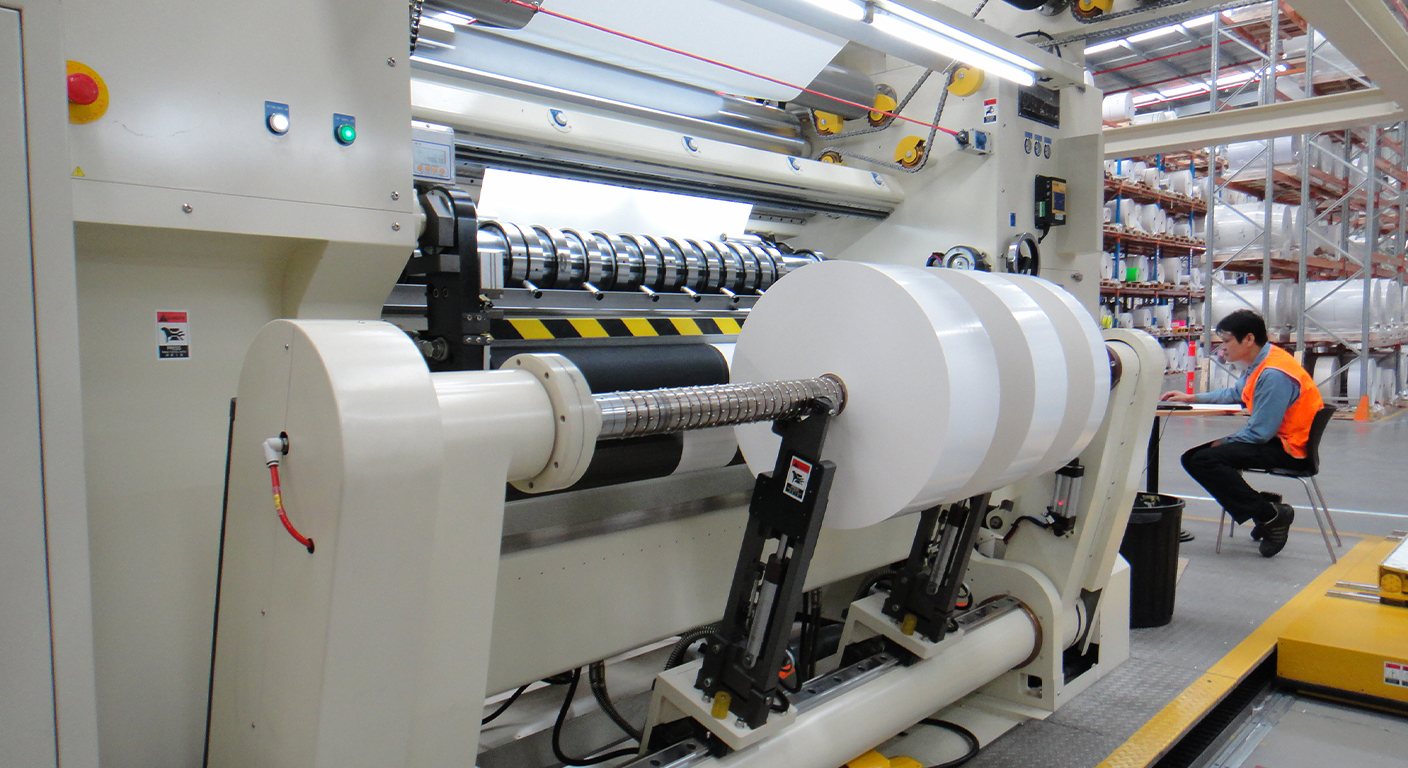
Release liner is a substrate coated on one or both sides with a release agent — typically silicone — that prevents adhesives from bonding permanently to the carrier during storage and transport. Common substrates include:
- Glassine paper — used in PSA label converting.
- Kraft paper liner and clay-coated paper liner — the most common liner substrate in general-purpose labelstock range.
- Silicone-coated paper — used in tape, medical, and industrial applications.
- Double-sided release paper — silicone on both faces, used for transfer tapes and double-sided adhesive products.
- PET release film — polyester base with silicone coating, used for high-temperature or dimensional-stability applications.
The silicone coating that makes these materials useful as liners also creates challenges at the blade: silicone is a low-friction surface that behaves differently from uncoated paper under shear slitting. Adhesive residue buildup on the blade, static charge, and telescoping from insufficient winding tension control are the three most common issues in release liner slitting.
Three Slitting Challenges Specific to Release Liner
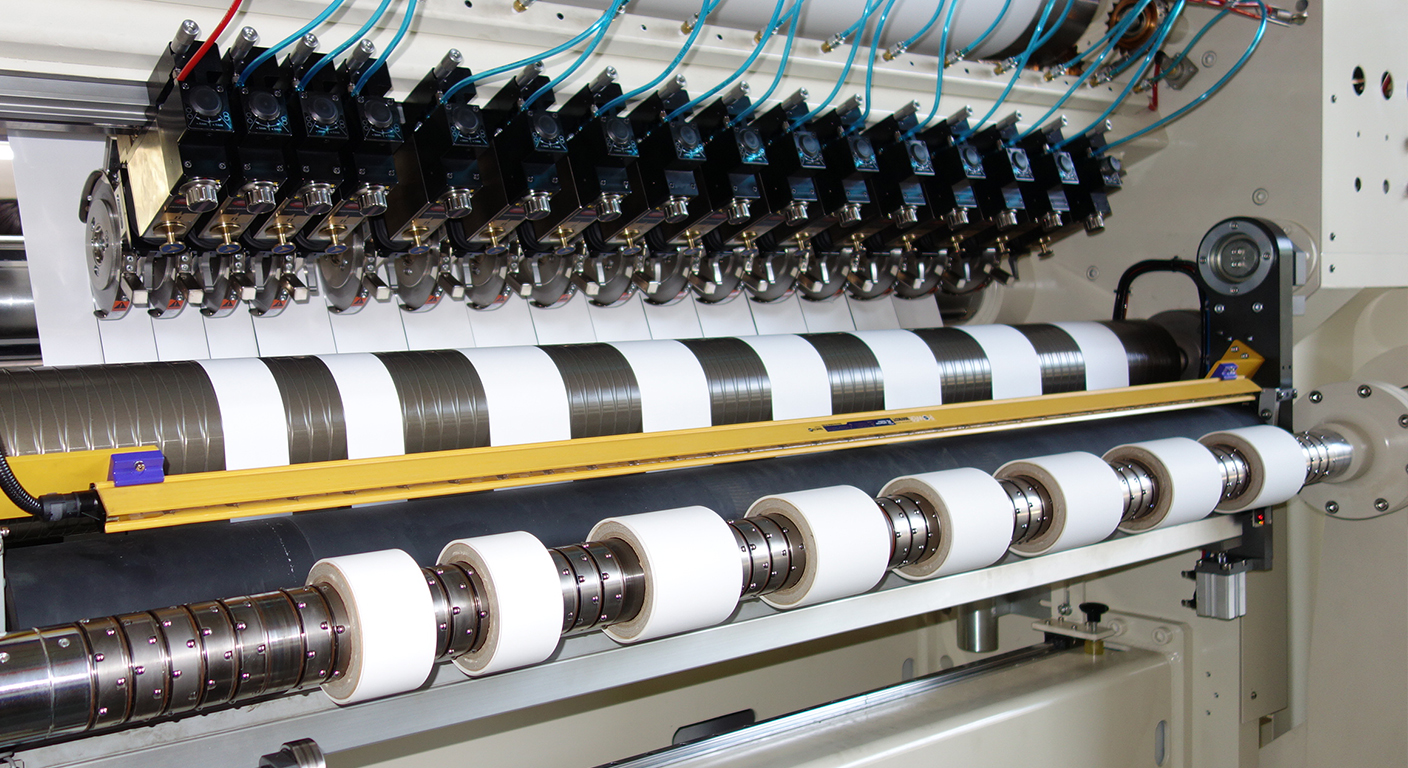
Blade fouling. During continuous slitting of PSA labelstock and adhesive-coated substrates, adhesive residue transfers to the blade edge, gradually degrading cut quality and increasing drag on the web. Machines configured for release liner converting include a knife clean device — a system that wipes the blade during the run — to maintain consistent edge quality without stopping the line.
Static charge. Silicone-coated surfaces generate significant electrostatic charge during high-speed slitting. Static causes finished rolls to attract dust and creates handling problems at the converting line downstream. Anti-static guide systems or ionizing bars at the slitting station prevent charge buildup.
Roll geometry on double-sided release paper. Double-sided release paper requires center winding at controlled tension — if tension is uneven, the finished roll will telescope or the liner will delaminate from the adhesive on rewind. Duplex winding architecture with independent shaft tension control is the standard configuration for this substrate.
Which Label Slitter Rewinder Is Right for Release Liner Converting?
Three Nicely models are configured for label and release liner converting. The right choice depends on finished roll diameter, web width, and production format — narrow specialty runs, high-volume wide-web, or secondary slitting from pre-slit reels.
| Model | Best for | Key features | Rewind diameter |
|---|---|---|---|
|
|
PSA labelstock, release liner, liner-less |
|
Up to 800 mm |
|
|
High-volume release liner, PSA labels |
|
Up to 1200 mm |
|
|
Narrow-web release liner, specialty labels, secondary slitting |
|
Up to 800 mm |
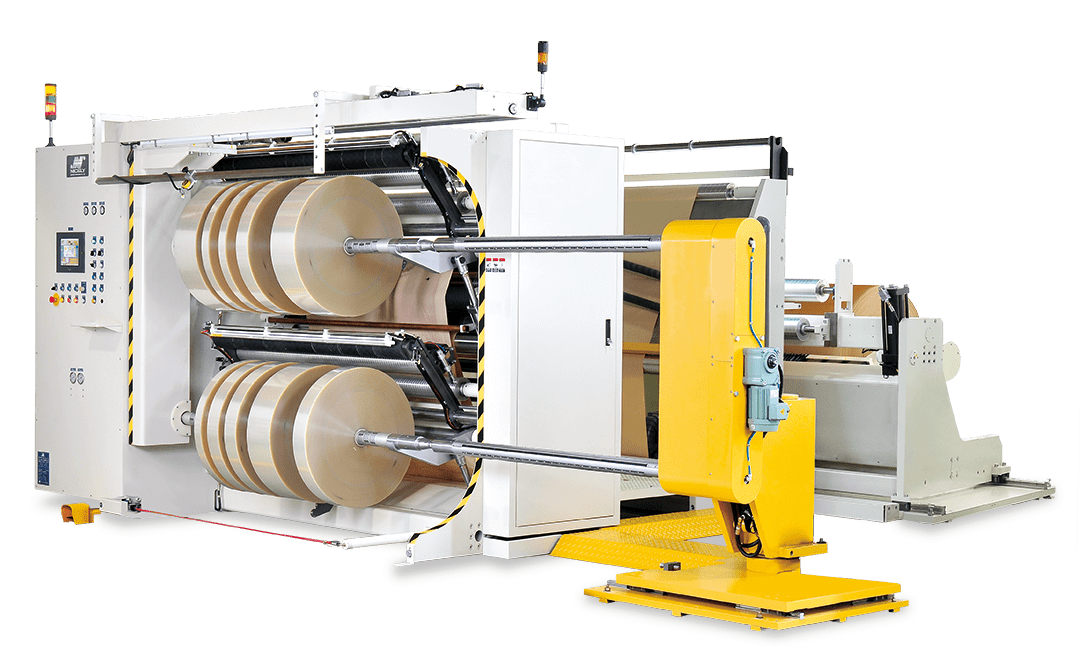
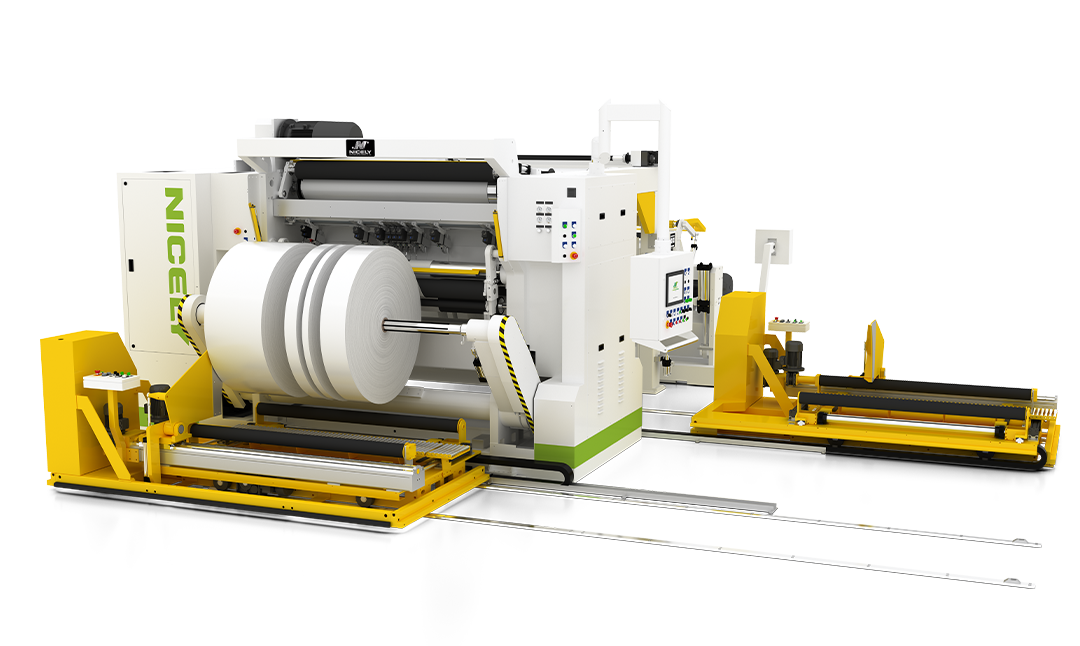
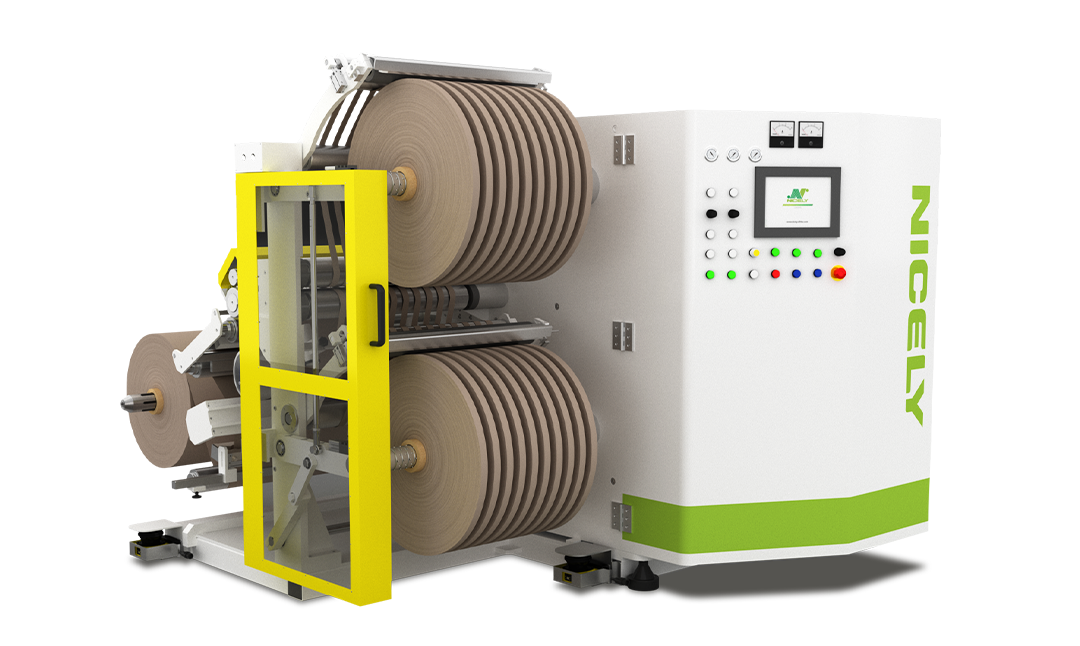
EG-7008 — PSA labelstock and release liner
The EG-7008 is Nicely's most established model for self-adhesive label and PSA labelstock converting. The shaftless unwind stand with anti-telescoping device stabilizes wide silicone-coated rolls before slitting — preventing roll sway that causes slit width variation on sticky substrates. The knife clean system is standard equipment: it continuously removes adhesive residue from the blade edge during the run, maintaining consistent cut quality across the full reel length.
EG-7008 series Duplex Shaft Center Winding Slitter Rewinder →
EG-8002 — High-volume release liner and large-format labelstock
The EG-8002 duplex center winding configuration handles both single-sided and double-sided release paper in the same machine. Rewind diameter up to 1,200 mm accommodates the long master rolls common in high-volume release liner production. The machine is equally suited for laminate structures — film-to-film, paper-to-paper, and film-to-paper composites — where controlled center winding tension is critical to maintaining roll integrity at large finished diameters.
EG-8002 series Duplex Center Winding Slitter Rewinder →
EG-7006 — Narrow-web and secondary slitting
The EG-7006 cantilevered design is built for narrow-web secondary slitting — converting wider slit reels into the narrow finished widths used in specialty labels, medical liner, electronic component tape (IC chip tape and carrier tape), and doctoring applications. Both unwind and rewind stands are cantilevered, allowing rolls to be loaded and unloaded from one side without full shaft removal — reducing changeover time on short-run and narrow-width formats.
EG-7006 series Narrow Web Cantilevered Slitter Rewinder →
Specifying a Label Slitter Rewinder for Labels with Release Liner
When evaluating a slitter rewinder for PSA labels, adhesive labelstock with release liner, or double-sided release paper converting, the key specification questions are:
-
Anti-telescoping device.
Does the machine include one?
For label and release liner applications, this is standard equipment. -
Knife clean system.
Is it included? For PSA and adhesive-coated substrates, blade residue buildup directly affects cut quality across the reel length. -
Static control.
Is an ionizing bar or anti-static guide standard?
For any film or coated substrate, static control is standard configuration. -
Differential shaft.
Is it available for the rewind?
For release paper, coated films, and substrates with significant caliper variation, a differential shaft allows each rewind lane to compensate independently — preventing tight lanes from distorting adjacent rolls. -
Minimum slit width and maximum rewind diameter.
Confirm both parameters for PSA labelstock and double-sided coated release paper before specifying. Nicely's engineering team works with label converters and release liner producers to specify machine configuration, knife setup, and tension parameters for silicone-coated paper, glassine, and PET release film applications.
Contact us to discuss your release liner slitting requirements →