







Nonwoven Slitting: Solving Hot Air Tension Challenges & Defects
Case Study 2026-03-17
Contents
- Why Hot Air Nonwoven Slitting Is Uniquely Difficult
- The Uptime Problem: From Speed to Reliability
- Three-Zone Tension Control: Unwind, Slit, Rewind
- Common Defects and Their Root Causes
- The Skills Gap and What It Means for Your Equipment
- Maintenance as a Production Strategy
- What to Look for in a Nonwoven Slitter Rewinder
- FAQ
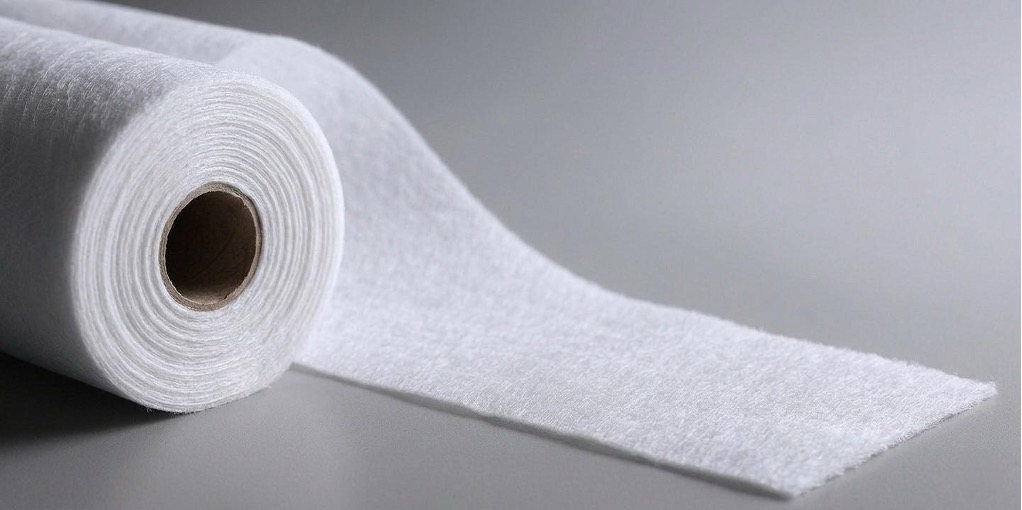
In the field of nonwoven slitting, hot air through nonwovens present unique challenges that standard equipment struggles to handle. The primary end-use applications for these materials are consumer products such as personal care articles, baby diapers, and medical disposables — all of which rely on breathable, thermally bonded fabrics. These material characteristics provide end users with a softer, more skin-friendly feel.
Due to the inherently soft and highly compressible nature of these materials, slitter rewinders respond to tension in ways that differ fundamentally from conventional substrates in certain technical respects.
This guide explores how advanced 3-zone tension control solves common defects like telescoping and loft compression, ensuring high-quality roll production and stable OEE in 2026.
Why Hot Air Nonwoven Slitting Is Uniquely Difficult
Hot air nonwoven fabrics present slitting challenges that differ considerably from those of conventional films, papers, or even standard spunbond. The web is soft, highly compressible, and tension-sensitive — requiring the slitter rewinder to incorporate optimized tension and drive control for stable processing.
Taking a 2025 hot air nonwoven delivery as an example, significant engineering effort went into both the tension control and drive systems. The compressible structure of hot air nonwovens means the material deforms even under moderate pressure — settings that work for other nonwovens can crush the lofty structure during rewinding, permanently altering the material's properties before the finished roll reaches the end customer.
"The defining challenge with hot air nonwoven slitting is not speed — it is maintaining the material's structural integrity from the parent roll to the finished slit roll."
This guide draws on real-world converting experience across spunlace, spunbond, and hot air bonded nonwoven fabrics. For a broader understanding of how different tensile properties affect machine configurations, explore our guide on upgrading your nonwoven production with advanced slitting machines.
The Uptime Problem: From Speed to Reliability
The global nonwoven converting industry is navigating a convergence of pressures in 2025 and 2026: tighter material specifications, accelerating automation requirements, and a steadily shrinking pool of experienced operators. In this environment, the performance question has fundamentally shifted.
The question is no longer how fast can the line run — it is whether the line can sustain stable slitting production across long production cycles without unexpected downtime or quality drift.
Overall Equipment Effectiveness - the new benchmark for nonwoven slitter evaluation
Unwind ⦁ Slitting ⦁ Rewind - each requiring independent tension management.
Winding alignment for nonwoven applications.
As OEE becomes the standard measure for slitter rewinder evaluation, converters are asking increasingly specific questions when evaluating equipment suppliers. Beyond mechanical specifications and maximum speed ratings, the real evaluation criteria now include:
-
Winding tension stability during speed transitions
Acceleration and deceleration cycles are the highest-risk moments for tension variation in hot air nonwoven slitting. The slitter rewinder must maintain consistent tension throughout the speed envelope.
-
Setup repeatability across shifts
With experienced operators retiring and new hires lacking institutional knowledge of soft web handling, the machine must deliver consistent output regardless of who is operating it.
-
Quality without a "hero operator"
The era of relying on a single expert who intuitively corrects tension issues is ending. The system — including control logic and tension feedback — must compensate automatically.
Three-Zone Tension Control: Unwind, Slitting, Rewind
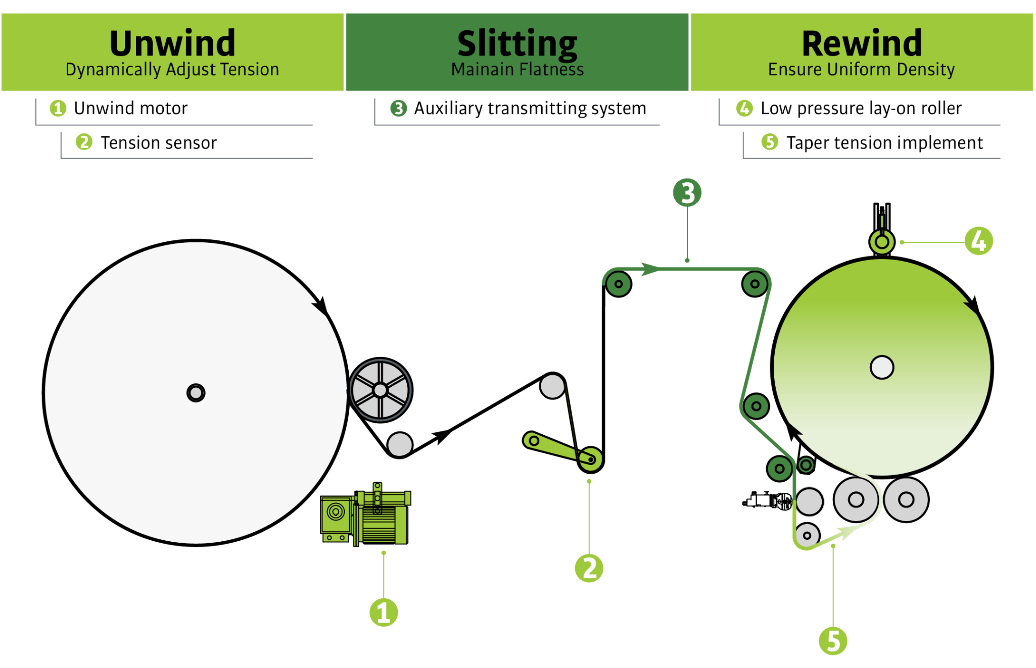
Professional nonwoven slitting tension control is not a single adjustment — it is a coordinated system managing three distinct zones of the converting process, each with its own objectives and failure modes.
| Zone | Primary Objective | Hot Air Nonwoven Specific Risk |
|---|---|---|
| Unwind Zone | Keep the web flat and trackable without deforming the nonwoven structure or compressing the loft. | Excessive unwind tension crushes the open fiber structure before slitting begins, causing permanent loft loss. |
| Slitting Zone | Maintain enough tension to prevent web flutter while avoiding lateral force that distorts cut edges. | Low-GSM hot air fabrics are prone to edge deformation and "necking" under lateral stress during slitting. |
| Rewind Zone | Dynamically adjust winding tension as roll diameter builds to ensure consistent nonwoven roll density from core to outer layer. | Telescoping, core looseness, and uneven density — the most common customer complaint for nonwoven slit rolls. |
The Rewind Zone: Where Most Problems Originate
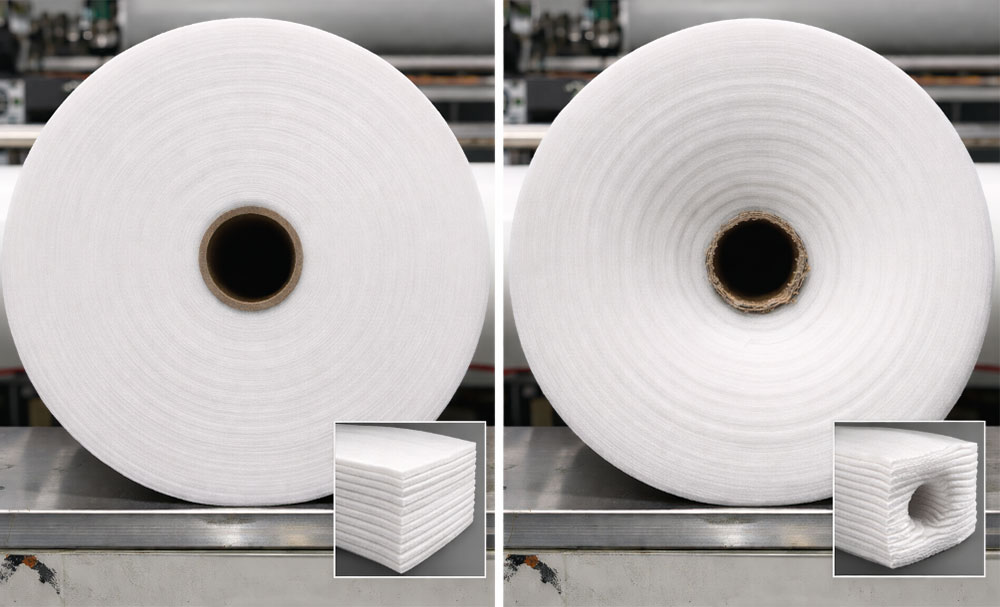
The rewind zone is the most common point of failure in hot air nonwoven slitting, and the most technically demanding to engineer correctly. A roll that appears acceptable directly off the winder can telescope during storage, develop looseness at the core, or show uneven winding density. To effectively address these winding defects, operators should familiarize themselves with troubleshooting common slitter rewinder machine problems, specifically focusing on tension and shaft alignment.
This is because as roll diameter increases from the empty core to a full roll, the physics of winding change continuously. Without a slitter rewinder that automatically compensates winding tension as a function of current diameter, the outer layers will inevitably be wound either too tight — causing compression of the hot air nonwoven structure — or too loose, causing instability during handling and downstream use.
A taper tension profile — where rewind tension decreases proportionally as roll diameter grows — is the engineering solution that prevents these defects without requiring operator intervention at every roll build cycle.
Common Defects and Their Root Causes
In nonwoven slitting, understanding where defects originate makes it possible to select equipment and process parameters that prevent them at the source. For hot air nonwovens, these defects often relate to the material's highly compressible nature. Below are the most common defects and their technical root causes:
Layers shift axially during handling or storage. Root cause: insufficient or inconsistent rewind tension, especially in the outer layers where taper compensation is critical.
Inner layers wound tighter than outer layers (or vice versa). Affects downstream converting speed and creates tension spikes at the customer's equipment.
Cut edges are crushed, frayed, or show fiber pull. Common when slitting tension or blade geometry is configured for film rather than soft nonwoven.
Lateral movement in the slitting zone causing width variation and blade chatter. Occurs when web tension in the slitting zone is too low relative to the material's basis weight.
The open, fluffy structure of hot air bonded nonwoven is permanently compressed by excessive nip pressure or unwind tension, reducing the material's functional.
Inner windings are insufficiently tensioned, leaving the core area soft and unstable. Causes roll collapse during downstream unwinding, especially at higher line speeds.
【 Case Study 】Hot-Air Nonwovens Present a Unique Slitting Challenge
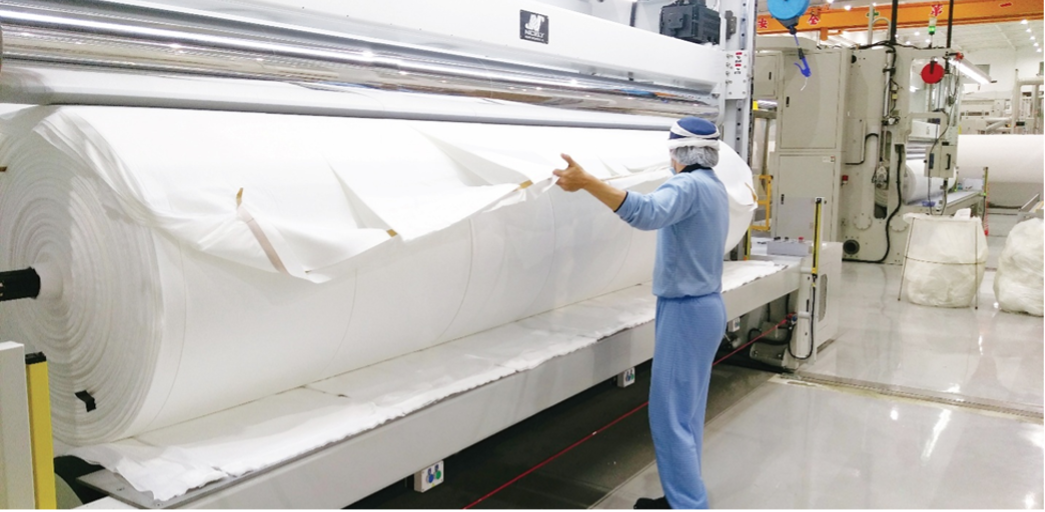
Hot-Air Nonwovens, their open, loft-rich fiber structure is highly sensitive to even minor tension fluctuations. When a leading Chinese nonwoven manufacturer needed a specialized slitting solution for hygiene-grade material, NICELY's engineering team spent several days on-site diagnosing and fine-tuning parameters. Through precision tension sensing and closed-loop feedback control, the team resolved critical winding issues — delivering a complete solution combining the EG-SR410 inline winder and EG-2001GA offline slitter, fully compliant with food-grade safety requirements.
The Skills Gap and What It Means for Your Equipment Selection
Experienced nonwoven slitting operators who could "feel" the web and intuitively correct tension issues are retiring across the industry. In many converting plants, the institutional knowledge accumulated over decades of working with specific hot air nonwoven substrates is leaving the facility without an effective transfer to the next generation of machine operators.
This workforce transition is not a temporary challenge — it is a structural change in the industry that affects equipment selection criteria permanently. The slitter rewinder that was appropriate in 2015, when a veteran operator could compensate for its limitations through skill and experience, is not the right machine for 2025's operating reality.
The limiting factor in nonwoven converting is no longer equipment capability — it is the availability of people who can keep slitting lines operating within the correct process window across multiple shifts. The machine must compensate for what the operator cannot reliably deliver.
This means that modern nonwoven slitter rewinder evaluation must weight the following factors more heavily than a pure speed or throughput comparison:
- Process parameter storage and recipe recall — allowing operators to reproduce proven settings without manual reconfiguration.
- Automatic tension compensation that responds to web conditions rather than depending on operator judgment.
- Clear, interpretable control interfaces that communicate machine status without requiring specialist knowledge to read.
- Structured guidance built into the operating workflow that supports operators who lack deep experience with compressible substrates.
Maintenance as a Production Strategy
Nonwoven converting plants that consistently achieve high OEE (Overall Equipment Effectiveness) in slitting operations have reframed maintenance — from reactive troubleshooting after a failure occurs to proactive planning that prevents failures from occurring in the first place. This distinction is especially important in hot air nonwoven slitting, where tension system components are subject to continuous mechanical stress and gradual calibration drift.
Best-practice converting operations in 2026 are implementing structured maintenance programs. Implementing these key maintenance tasks for your slitter rewinder—such as scheduled tension system calibration and routine inspections—prevents failures from occurring in the first place.
-
Scheduled tension system calibration and verification
Load cells, brake systems, and torque-controlled drives require periodic recalibration. A drift of even 5% in tension feedback accuracy is sufficient to produce roll quality issues in sensitive hot air nonwoven substrates.
-
Planned downtime windows for slitter rewinder preventive maintenance
Planned maintenance is far cheaper than unexpected breakdowns — especially during peak production, when downtime costs the most and skilled support is hardest to find.
-
Structured inspection programs for web handling components
Nip rollers, guide rollers, and edge sensors are the first components to degrade in nonwoven converting environments. Regular inspection intervals, documented in production records, allow deterioration to be caught before it affects product quality.
-
Operator training refresh cycles for soft web handling
As workforce composition changes, regular training refreshes — particularly on tension control fundamentals and the specific behavior of hot air nonwoven substrates — maintain a consistent knowledge baseline across the operating team.
In an operating environment where experienced troubleshooters are no longer reliably available, unplanned stoppages become disproportionately costly. When a slitting line stops unexpectedly and no one on shift has the experience to diagnose the cause quickly, production loss accumulates rapidly. Prevention — through systematic maintenance — is the only viable strategy.
What to Look for in a Nonwoven Slitter Rewinder
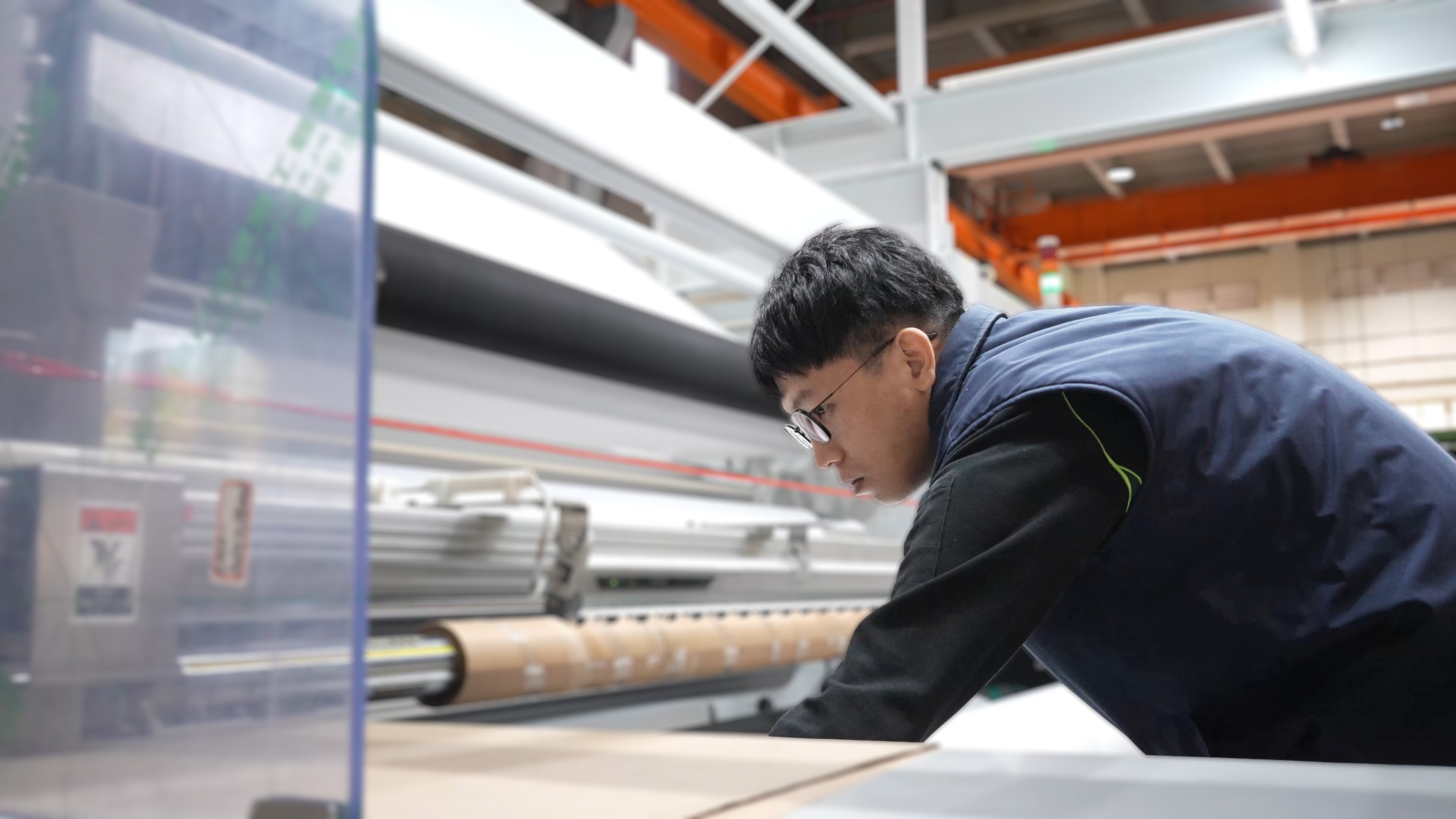
Selecting a slitter rewinder for hot air nonwoven applications requires moving beyond standard specification sheets. When evaluating capacity and material compatibility, follow our industry checklist for choosing the right slitter rewinder to ensure your investment maximizes ROI and meets long-term production needs. The following capabilities are specifically relevant to hot air nonwoven slitting performance and should be confirmed — through technical discussion and ideally machine trials — before a purchasing decision is made.
Tension Control Architecture
The machine should provide independently controlled tension in each of the three zones — unwind, slitting, and rewind — with closed-loop feedback that maintains set tension regardless of line speed fluctuations. For hot air nonwoven, open-loop or operator-adjusted tension systems are not sufficient for consistent roll quality across a full production shift.
Taper Tension Profile Programming
The rewind system must support programmable taper tension profiles that automatically reduce winding tension as roll diameter increases. This is the engineering foundation for preventing telescoping and achieving consistent roll density in soft, compressible substrates.
Low-Pressure Nip Roller Control
Hot air nonwoven fabrics are permanently deformed by excessive nip pressure. The slitter rewinder must be capable of operating at the low nip pressures appropriate for these materials, with accurate repeatability across production runs.
Recipe Storage and Process Repeatability
With a workforce that increasingly lacks deep experience with specific substrates, the ability to store proven parameter sets — and recall them reliably at the start of each production run — is a core operational requirement, not a convenience feature.
After-Sales Support and Training
For hot air nonwoven converting, where the interaction between machine behavior and substrate properties is complex, proximity and responsiveness of technical support from the equipment supplier directly affects your ability to resolve issues quickly and maintain production stability.
Frequently Asked Questions
Q: How does a nonwoven slitting machine handle hot air fabrics differently than spunbond?
Hot air bonded nonwovens have an open, lofted fiber structure that is significantly more compressible than spunbond or spunlace materials. They are more sensitive to nip pressure, more prone to loft compression under moderate tension, and require lower rewind tension profiles to avoid deforming the material's functional structure. Spunlace fabrics, while also soft, are hydroentangled into a more consolidated structure and can typically tolerate slightly higher tension settings than hot air bonded materials of similar basis weight.
Q: What is zone-based tension control in nonwoven slitting?
Zone-based tension control manages the unwind, slitting, and rewind sections of the slitter rewinder independently, with closed-loop feedback maintaining the set tension in each zone regardless of line speed changes. The unwind zone keeps the web flat without deforming the nonwoven structure; the slitting zone prevents web flutter and lateral stress; the rewind zone dynamically adjusts tension as roll diameter builds to ensure consistent density from core to outer wrap.
Q: How can I prevent telescoping in nonwoven roll winding?
Telescoping is caused by insufficient or inconsistent rewind tension, particularly in the outer layers of the roll. The solution is a slitter rewinder with a programmable taper tension profile — automatically reducing winding tension as diameter increases — combined with accurate nip pressure control and scheduled tension system calibration. If your current machine lacks taper tension capability, a control system upgrade may resolve the issue without full machine replacement.
Q: What slitting method is recommended for hot air nonwovens?
While razor, shear, and score slitting methods each have their distinct advantages in the converting industry, rotary shear slitting is generally recommended for hot air nonwoven applications, depending on basis weight and required edge quality.
Q: Can an existing slitter rewinder be upgraded for hot air nonwoven applications?
In many cases, yes. If you are choosing between a new machine or a retrofit, upgrading an existing slitter with modern tension control architecture can significantly improve performance on hot air nonwoven materials without the capital commitment of a completely new machine.
Q: What industries use hot air nonwoven slit rolls?
Slit hot air nonwoven rolls are primarily used in hygiene product manufacturing (baby diapers, adult incontinence products, feminine hygiene), medical disposables, and certain filtration applications. The soft, permeable structure of hot air bonded materials makes them ideal for acquisition-distribution layers and topsheet components in hygiene converting — markets with demanding width tolerances and strict roll quality specifications.
Q: Need a Slitting Solution for Hot Air Nonwoven?
NICELY Machinery has hands-on experience engineering slitter rewinders specifically for hot air nonwoven, spunlace, and compressible substrates. Talk to our technical team about your application.
